
Part 2: What Happens During a MAT Session — From Assessment to Activation
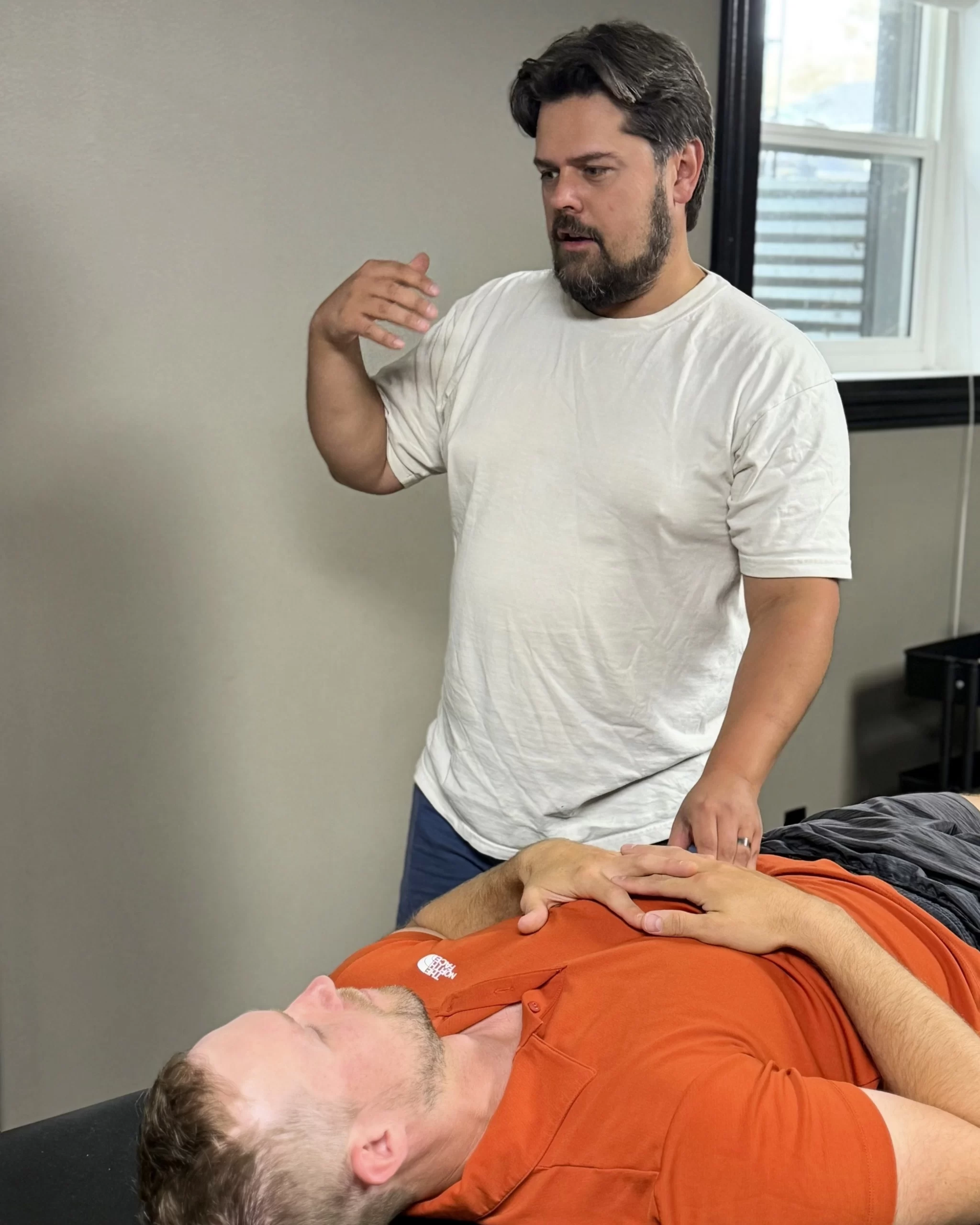
If you’ve never experienced Muscle Activation Techniques (MAT), you’re probably wondering what actually happens in a session.
One of the most common questions I hear is:
“Is this like massage?”
Short answer—no.
In fact, it’s quite the opposite.
Massage focuses on releasing tight muscles.
MAT focuses on identifying and strengthening weak ones.
A MAT session is a structured, step-by-step process designed to uncover where your body isn’t functioning properly—and restore it.
The 6-Step MAT Process
Step 1: Understanding Your History
Every session begins with a conversation.
We’ll cover:
- Injury history
- Current pain or stiffness
- Training routine and daily demands
- What you want your body to do
This step matters. Your body doesn’t break down randomly—there’s always a reason.
Your history helps us build the roadmap.
Step 2: Range of Motion Assessment
Next, we assess how your joints move.
This isn’t about how far you can stretch—it’s about symmetry and control.
We’re looking for:
- Limited range of motion
- Instability
- Compensation patterns
Where movement breaks down, muscle function is often the root cause.
Step 3: Muscle Testing
This is where MAT truly separates itself.
We use specific tests to isolate individual muscles and determine if they can contract and hold force.
If a muscle tests weak, it’s not always because it’s untrained—it’s often because it’s not communicating properly with your nervous system.
When that communication breaks down:
- Other muscles compensate
- Movement becomes inefficient
- Tightness and discomfort build over time
This step tells us how well your muscles and nervous system are working together.
Step 4: Activation
Once we identify the problem, we address it directly.
Using precise, hands-on pressure at specific points (the muscle’s origin and insertion), we stimulate the muscle to reconnect with the nervous system.
The goal is simple:
- restore access
We’re not forcing change—we’re allowing your body to function the way it was designed to.
Step 5: Re-Testing
After activation, we immediately test again.
We’re looking for:
- Increased strength
- Improved range of motion
- Reduced discomfort
This isn’t guesswork—the feedback is immediate and measurable.
Step 6: Integration
Now we put it into motion.
Once muscles are functioning properly, we integrate them into movement—simple or complex, depending on your goals.
Because now your body has what it needs:
- stability
And with stability comes mobility.
What You Can Expect After a Session
Most people notice changes right away:
- Feeling stronger
- Smoother, more controlled movement
- Less tension and stiffness
- Improved body awareness
Things that didn’t feel right before start to click:
- Your feet feel more connected to the ground
- Breathing feels easier
- Movements feel more deliberate and controlled
That’s your body working the way it’s supposed to.
Why This Process Matters
If muscles aren’t functioning properly, your body will compensate—every time.
You can stretch, foam roll, and push harder in workouts—but if the root issue is poor muscle activation, those tools only go so far.
MAT gives you something different: a foundation of stability.
And when stability improves:
- Mobility improves
- Strength improves
- Performance improves
- Recovery improves
In the next post, I’ll break down how MAT and training work together—and why combining the two is one of the most effective ways to build a strong, resilient body.
Stay tuned…