
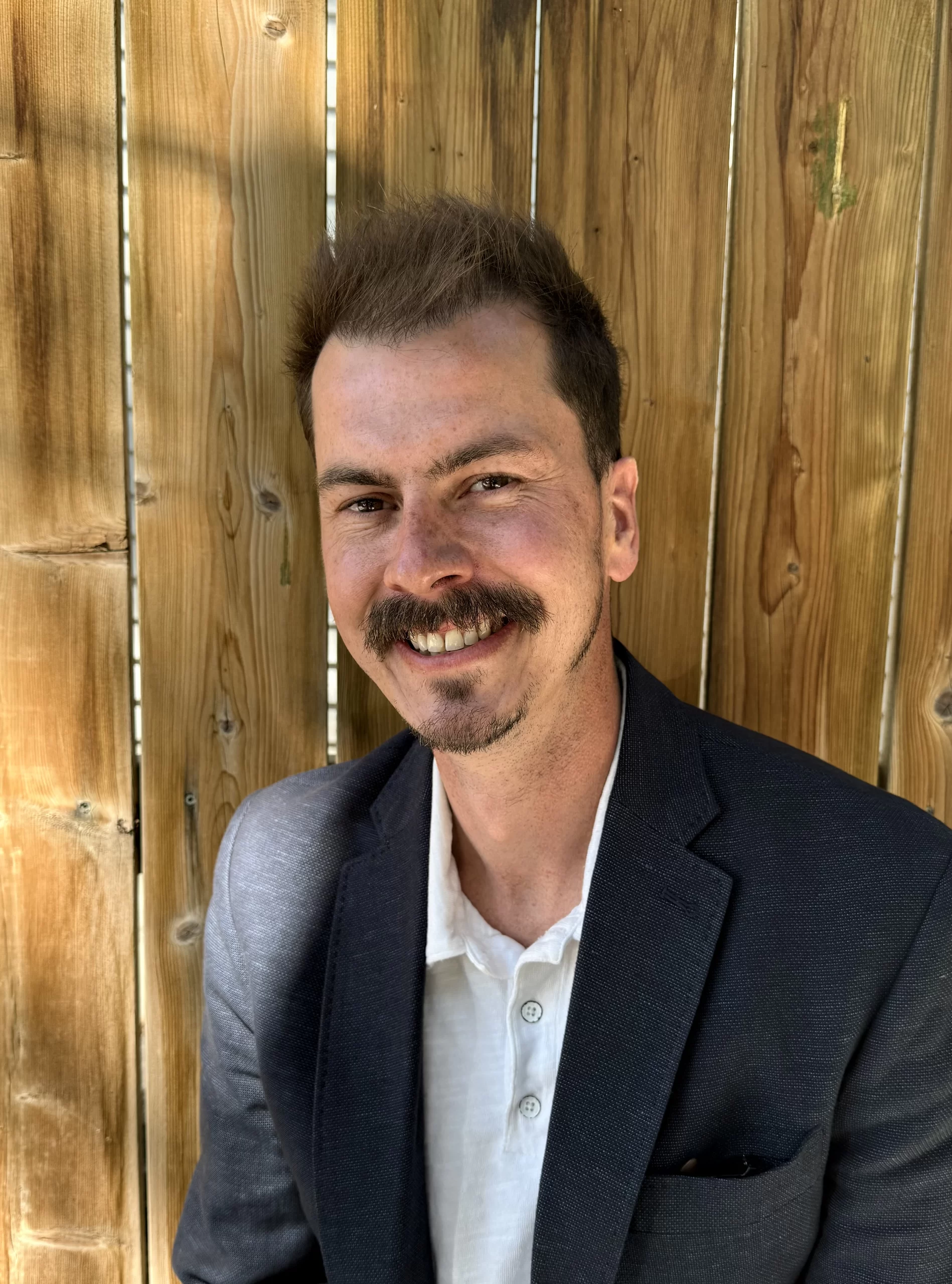
Meet Matt Groeneveld
Counselling Therapist & Canadian Certified Counsellor (CCC)
Clients often describe Matt’s style as calm, thoughtful, straightforward, and collaborative. He asks genuine questions, listen carefully, and aims to create an environment where you don’t have to front and pretend everything is okay.
Matt believes therapy isn’t about fixing people. It’s about making sense of your experience. Together, you and Matt slow things down, explore what’s happening beneath the surface, understand the patterns that have shaped your life, and reconnect with what matters most to you. By accepting what is, you can learn what you want and make choices toward how to get there.
Matt begins accepting clients at our clinic on July 16, 2026. Online booking of appointments is now available so please click HERE or call to book at 403.993.6337.
About Matt
Matt loves adventure at heart, which is why he spends his time in the garden, reading, or playing guitar as quietly as possible. He lives with his family of four on an acreage down the road from the family farm, which remains one of his favourite places of all time (especially if it’s not to fix/maintain/or tear down something).
Fun Fact
Matt just discovered both his maternal grandparents have ancestors who were on the Mayflower… They were both on the Mayflower because they were brother and sister.
Specialties / Special Focus
Raised on a family farm, Matt has a deep understanding of rural life and the unique challenges faced by individuals, couples, and families in farming and agricultural communities. He is a Board Member with the Canadian Centre for Agricultural Wellbeing. He is also involved with AgWell Alberta, providing access to mental health support for farmers in Alberta.
No single therapy fits every person. That’s why Matt draws from several evidence-based approaches—including Cognitive Behavioural Therapy (CBT), Acceptance and Commitment Therapy (ACT), Narrative Therapy, Existential Psychotherapy, and Solution-Focused Therapy—to fit your unique needs rather than asking you to fit a particular model.
While techniques matter, Matt believes the relationship matters just as much. His role isn’t to tell you who to become. It’s to help you better understand yourself, challenge what no longer serves you, and develop the confidence to move forward in a way that aligns with your values. Matt lists: Life Transitions & Identity Development and Faith & Spiritual Integration among a couple of his specializations.
Life gets weird.
Sometimes it happens gradually through stress, responsibility, or loss. Other times it comes suddenly through trauma, conflict, or unexpected change. Before long, you may find yourself going through the motions—feeling stuck, overwhelmed, disconnected, or simply not like yourself. Whether you’re struggling with anxiety, depression, trauma, relationship difficulties, burnout, identity questions, or a major life transition, Matt’s goal is to offer a space where you can think clearly, speak honestly, and begin moving toward a life that feels more grounded and intentional.
Rural or urban, couple or single, adolescent or adult, Matt is here for you.
Qualifications:
- Registered Counselling Therapist (Association of Counselling Therapy of Alberta)
- Canadian Certified Counsellor (Canadian Counselling and Psychotherapy Association)
- Master of Arts in Counselling Psychology (Yorkville University, with honours)
- Master of Theological Studies (University of Toronto)
Matt writes for AgWell Alberta and below is a sampling of a couple of his articles. Enjoy.
~~~~~~~~~~~~~~~~~~~~
Good while it lasts: Optimistically bracing for it
After a soggy start of the growing season, our crops are getting some much needed heat. The ground is covered green, canola and peas are flowering, and it’s Stampede, which means anyone with cows is getting ready for haying. Things look a lot different than they did a few years ago, when discussion revolved around mitigating the effects of drought. Now the sloughs are filled, new ones calved from the slightest imprint, and some struggle to find a dry enough window for spraying. Not a typical year.
In this corner of the world, it looks like a strong start. September is a long way off. With the wisdom of not counting chickens before they hatch, my dad, ever grounded, always said, It’s not in the bin yet. Not one to make a sport of curbing optimism, he knows, like any farmer, never to be surprised and that things will change.
There’s time yet. With the heat comes the risk of hail. Following a storm system earlier in the month, some producers are reporting losses already this season. Depending on the damage, the slow start might mean the plants will recover. For now we’re either making claims or waiting.
While we wait, we remain optimistic while bracing for the worst. It’s a balancing act farmers know well. We make plans for the farm, the family, and the future—plans strong enough to motivate us, but held loosely enough to survive whatever comes next. Only farmers manage expectations like a riverbed manages water. We yield to nature.
Waiting is often the hardest part. There’s little left to do but watch the forecast, inspect the fields, and wonder what tomorrow will bring. The stress of living in the “what ifs” before anything has actually happened is a familiar feeling in agriculture. We prepare for the worst because we know it’s possible, but if we’re not careful, we can start living through tomorrow’s problems before they arrive.
The challenge isn’t pretending everything will work out. It’s learning to hold hope and uncertainty at the same time. We do what we can today, knowing much of what happens next is beyond our control. That’s not resignation; it’s resilience.
September will come; for now it’s July. In the briefest of seasons, let’s find something to enjoy. Remember why you do it, what and who you love. We’re off to a great start, and that’s worth being grateful of, even if it’s not in the bin yet.
And if you had the grit not to get rid of the cows like the rest of us, happy haying!
~~~~~~~~~~~~~~~~~~~~
Comparison Fatigue
It’s July. The quiet days of winter seem distant, the trials of seeding mostly forgotten, and the winds of spring calmed (for now). The slow tug-of-war between freeze and thaw, that jagged dance to an erratic tempo, the air gives up its cold, and the land warms. That’s almost forgotten. The earth circled around. The sun came around as it always does. And the seeds were planted (hopefully).
Now we wait. On the ground we look to the crops and assess the health of the plants and soil. Speculate on production and prepare for the push of harvest. We draw rough estimates and watch the markets. Things look good, but it’s not in the bin. Things look rough, but there’s time yet. Things look ok, but not as good as the neighbours’.
We don’t know yet. And comparisons are tempting. We drive past the same sections every time we leave the house. It’s hard not to wonder. What did or didn’t happen? Sometimes it’s obvious. Sometimes it seems the rain falls everywhere but here. Disease strikes, and it’s only happening here. Or it appears to. And it looks that way because it feels that way.
All farmers juggle uncertainty. And all the skills mastered and applied may or may not payoff. You can have the best equipment, and things can still surprise you. Will surprise you. With so much out of a farmer’s control, there’s a need to find order and control in some aspect of life, some sense of influence over one’s own happiness.
One’s efforts, successes, and mistakes are at times highly visible and are often a topic of conversation. Some competitiveness can teach us, but it can consume our thinking. When it becomes a measure by which we evaluate our labour, the standards can become inflated and unrealistic. It can become internalized and feed self-hatred.
If you’re going to compare, include the spectrum. There are always plots on either side. Zoom out a bit and include more evidence in your evaluation. Before you condemn yourself, look for areas that are going well or do seem promising.
Be curious. Talk to the neighbour. You might learn something. Even if it’s just that he got lucky.
And for now, while we don’t know, enjoy the reprieve. Rest while you can. Catching up on whatever you put down before seeding. Go to the lake. Date your wife. Spend time with the kids.